Peptides in Skincare: Benefits, Types, and Results
- rubenmag35
- 2 days ago
- 8 min read
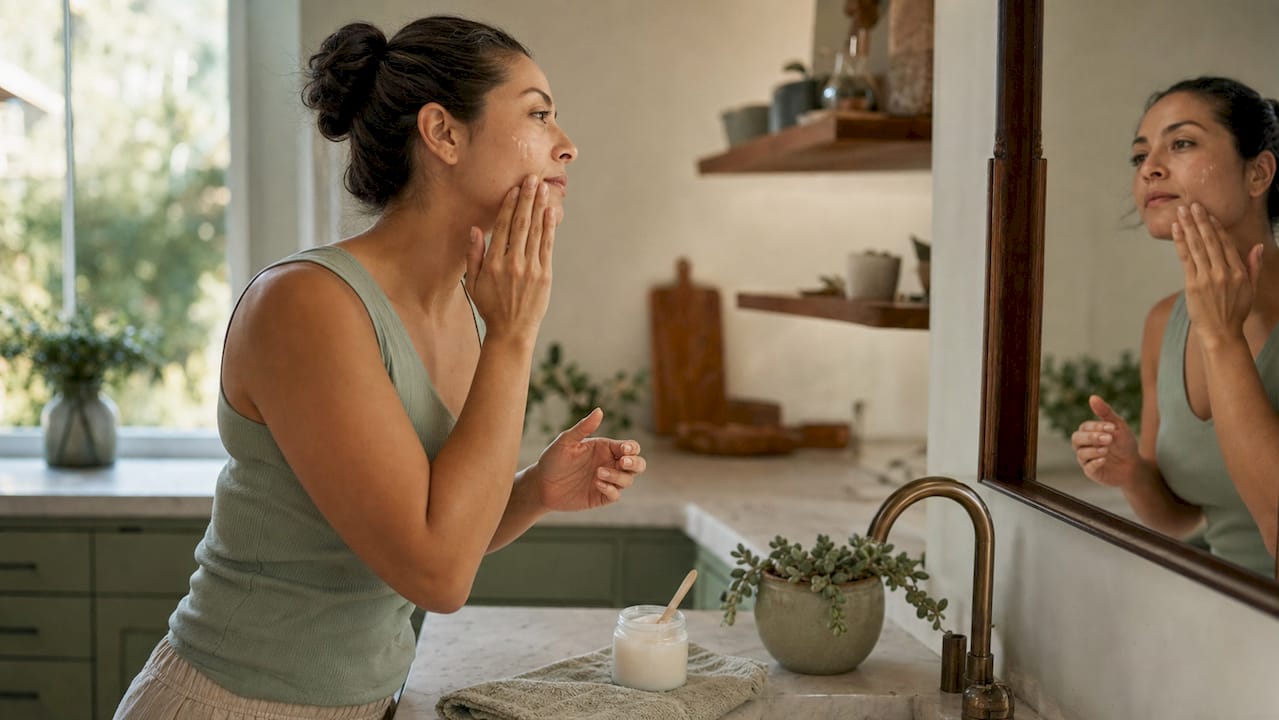
Peptides in skincare are short chains of amino acids that act as signaling molecules, telling your skin to produce more collagen, repair damaged tissue, and retain moisture. The industry term for these compounds is “bioactive peptides,” and they represent one of the most studied categories in modern dermatology. Unlike single-ingredient actives such as retinol or vitamin C, peptides work by mimicking the skin’s own communication signals. That makes them uniquely effective and, critically, well-tolerated by nearly every skin type. Clinical research backs their role in reducing wrinkle depth, improving firmness, and supporting long-term skin resilience.
How do peptides work in skincare to improve skin health?
Peptides improve skin health by triggering the fibroblasts in your dermis to produce more collagen and elastin. Fibroblasts are the cells responsible for building and maintaining the skin’s structural matrix. When peptides bind to receptors on these cells, they send a message that collagen levels are low and production needs to increase. The result is firmer, denser skin over time.
Three main peptide classes drive most of the results you see in clinical studies:
Signal peptides (such as palmitoyl pentapeptide-4, marketed as Matrixyl) directly stimulate collagen synthesis and extracellular matrix remodeling.
Carrier peptides (such as GHK-Cu, the copper peptide complex) deliver trace minerals like copper to the skin, supporting wound healing and collagen cross-linking.
Neuromodulatory peptides (such as Argireline, also known as acetyl hexapeptide-3) relax facial muscles to soften expression lines, similar in concept to how botulinum toxin works but far milder.
Formulation matters as much as peptide type. Many peptides exceed 500 Daltons in molecular weight, which limits passive penetration through the skin barrier. Manufacturers address this with palmitoyl modifications, which attach a fatty acid chain to the peptide and make it more lipophilic, improving absorption. pH also plays a role. Peptides perform best in formulations between pH 4 and 7, and products outside that range can degrade the molecule before it reaches the dermal-epidermal junction.
Twice-daily application at 3–4 ppm concentrations produced significant wrinkle depth reduction after 8 weeks in clinical trials. That concentration is low, which means a little goes a long way in a well-formulated product.
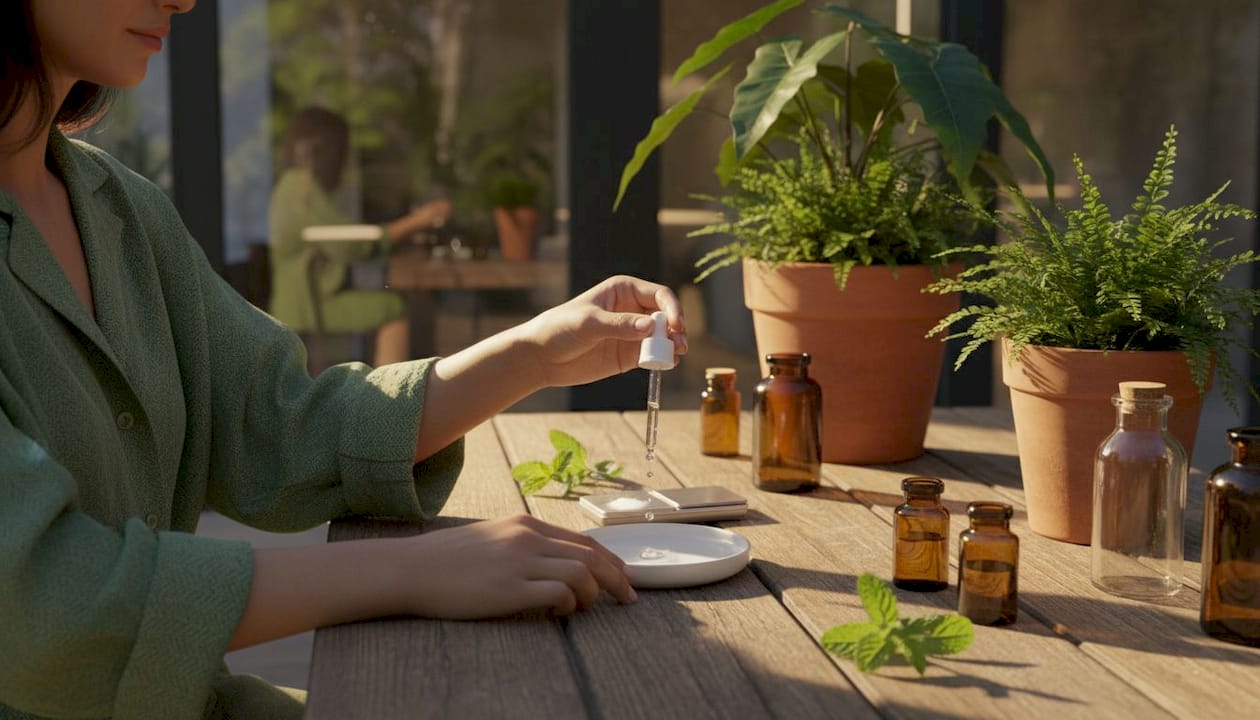
Pro Tip: Look for peptides listed in the first half of an ingredient list, and check that the product uses airless or opaque packaging. Peptides degrade quickly when exposed to air and light, so packaging is not cosmetic, it is functional.
What is the difference between peptides and retinol in skincare?
Retinol and peptides both target aging, but they work through completely different pathways. Retinol is a vitamin A derivative that speeds up cell turnover and increases collagen production by binding to nuclear receptors inside skin cells. Peptides work outside the cell, binding to surface receptors and sending signals that prompt repair. Neither approach is universally superior. The right choice depends on your skin’s tolerance and your goals.
The most significant practical difference is tolerability. Retinol’s adjustment period runs 4–8 weeks, during which peeling, redness, and dryness are common. Peptides produce none of those symptoms. They are well-tolerated from the first application, which makes them the better starting point for anyone new to anti-aging actives or with sensitive skin.
Criteria | Peptides | Retinol |
Mechanism | Surface receptor signaling | Nuclear receptor binding, cell turnover |
Clinical evidence | Strong for select molecules (GHK-Cu, Matrixyl) | Extensive across multiple decades |
Irritation risk | Very low | Moderate to high during adjustment |
Best use | Sensitive skin, maintenance, layering | Accelerated correction, acne, hyperpigmentation |
Pregnancy safety | Generally considered safe | Contraindicated |
The good news is that you do not have to choose one or the other. Peptides and retinol work well together when applied at separate times of day. A peptide serum in the morning and retinol at night avoids pH conflicts and lets each ingredient perform at its best.
Pro Tip: If you are introducing retinol for the first time, use your peptide moisturizer on top of it at night. The peptides help reinforce the skin barrier while retinol works underneath, reducing the chance of irritation.
What are the key types of peptides used in skincare?
Not all peptides deliver the same results. The category is broad, and the evidence behind individual molecules varies significantly. Physicians caution that only select molecules like GHK-Cu and Matrixyl have robust clinical backing. Here is what the research actually supports:
Palmitoyl pentapeptide-4 (Matrixyl): The most studied signal peptide. It stimulates collagen I, III, and IV production and has shown measurable improvements in wrinkle depth and skin texture in multiple trials. The palmitoyl modification improves skin penetration significantly.
GHK-Cu (copper peptide complex): A carrier peptide that delivers copper ions to the dermis. Topical GHK-Cu cream improves skin density and thickness after 12 weeks compared to placebo. It also reduces inflammation and supports wound healing, making it particularly useful after procedures or for compromised skin. The copper peptides benefits extend to stimulating elastin production, which retinol does not directly target.
Acetyl hexapeptide-3 (Argireline): A neuromodulatory peptide that inhibits the neurotransmitter signals that cause repetitive muscle contractions. It softens expression lines around the eyes and forehead with consistent use.
Palmitoyl tripeptide-1 and palmitoyl tetrapeptide-7 (Matrixyl 3000): An updated Matrixyl formulation that combines two peptides to target both collagen synthesis and inflammation. Widely used in peptide creams for aging.
Leuphasyl and Syn-Ake: Neuromodulatory peptides with mechanisms similar to Argireline, though with a smaller evidence base. They appear in premium formulations targeting dynamic wrinkles.
Emerging research is also exploring longevity-associated peptides that may influence cellular repair pathways beyond collagen. That science is still early-stage, and no topical product should be marketed on longevity claims without peer-reviewed support.
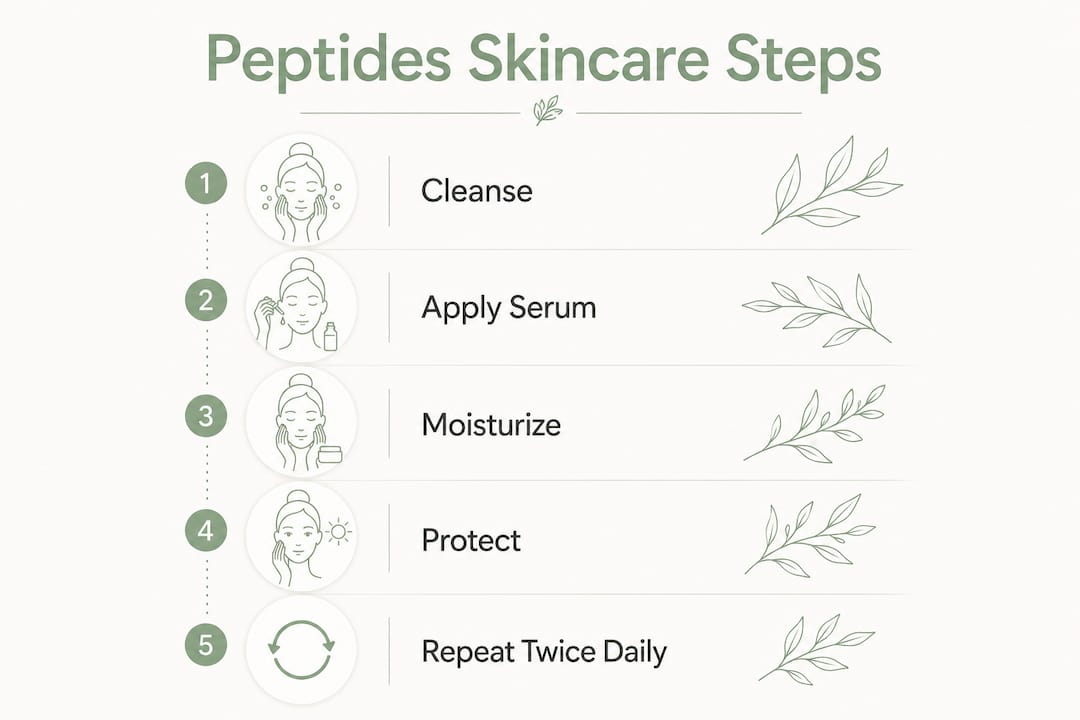
How to effectively incorporate peptides into your skincare routine
Building a peptide routine is straightforward, but the order and timing of application determine how much benefit you actually get.
Cleanse first. Apply peptide serums to clean skin. Residue from sunscreen or makeup blocks absorption.
Apply your peptide serum in the morning. Peptides pair well with antioxidants like vitamin C and niacinamide. Morning peptides paired with antioxidants maximize protection and repair without any irritation risk.
Layer thinnest to thickest. Serums go before moisturizers. If you use a peptide moisturizer, apply it after any water-based serums have absorbed.
Use retinol at night, separately. Retinol works at a lower pH than most peptide formulations. Mixing them in the same step can degrade both actives. Keep them in separate routines.
Give it time. Visible results from peptides require patience. Peptides show cumulative improvements over 12 weeks or more, reinforcing the skin’s natural repair processes rather than delivering fast changes.
Store products correctly. Airless pumps and opaque bottles protect peptides from oxidation. Avoid products in open jars, especially if they contain GHK-Cu, which is sensitive to light and air.
For sensitive skin, start with a peptide moisturizer rather than a concentrated serum. The lower active concentration reduces any chance of reaction while still delivering benefit. Once your skin adjusts, you can layer a serum underneath.
Pro Tip: Hyaluronic acid and peptides are one of skincare’s most compatible pairings. Hyaluronic acid draws water into the skin, and peptides signal repair at the structural level. Using a hyaluronic acid essence before your peptide serum amplifies hydration and helps the peptides absorb more evenly.
Are peptides good for all skin types and concerns?
Peptides are one of the most universally suitable active ingredients in skincare. Their tolerability profile is the key reason dermatologists recommend them across a wide range of skin types and conditions.
Sensitive and rosacea-prone skin: Peptides are an effective alternative for sensitive or barrier-compromised skin where retinol is too irritating. They strengthen the skin barrier rather than disrupting it.
Mature skin: Signal peptides and GHK-Cu address the two main concerns of aging skin: collagen loss and reduced skin density. A peptide cream for aging used consistently over 12 weeks produces measurable firmness improvements.
Pregnant or breastfeeding skin: Retinoids are contraindicated during pregnancy. Peptides are generally considered safe and offer a viable anti-aging option during this period.
Acne-prone skin: Peptides do not directly treat acne, but they support barrier repair after breakouts and reduce post-inflammatory damage. They work well alongside targeted acne treatments.
Dry or dehydrated skin: Peptide moisturizer benefits include supporting the skin’s natural moisture-retention mechanisms, making them a strong choice for anyone dealing with chronic dryness.
The one scenario where peptides alone fall short is severe photodamage or deep wrinkles. In those cases, peptides work best as a supporting ingredient alongside stronger actives like retinol or professional treatments, not as a standalone correction.
Key Takeaways
Peptides are the most universally tolerated anti-aging active in skincare, with clinical evidence supporting collagen stimulation, skin density improvement, and wrinkle reduction when used consistently over 8–12 weeks.
Point | Details |
Peptides stimulate collagen | Signal peptides like Matrixyl trigger fibroblasts to produce collagen I, III, and IV. |
GHK-Cu has the strongest evidence | Topical copper peptide cream improves skin density and thickness after 12 weeks. |
Peptides and retinol complement each other | Apply peptides in the morning and retinol at night to avoid pH conflicts. |
Formulation determines efficacy | Palmitoyl-modified peptides and airless packaging are non-negotiable for real results. |
Safe for sensitive and pregnant skin | Peptides rarely cause irritation and are a safe retinol alternative during pregnancy. |
Why I think peptides deserve more credit than they get
Most skincare conversations treat peptides as the safe, boring option. Retinol gets the dramatic before-and-after photos. Vitamin C gets the antioxidant headlines. Peptides get filed under “gentle and supportive.” That framing undersells them badly.
The reality is that peptides do something neither retinol nor vitamin C can do cleanly: they speak the skin’s own language. They do not force a biological response by accelerating cell turnover or neutralizing free radicals. They send a signal, and the skin responds on its own terms. That is a fundamentally different mechanism, and it is why peptides produce results that compound over time rather than plateau.
The honest limitation is that not every peptide on the market earns its place. Physicians are right to flag that only a handful of molecules, GHK-Cu and Matrixyl being the clearest examples, have the clinical evidence to justify their price. A product with ten peptides listed in the last five ingredients is not a peptide product. It is a marketing exercise.
My recommendation is to treat peptides as foundational, not optional. Build your routine around a well-formulated peptide serum or moisturizer, pair it with retinol at night once your skin is ready, and give it a full 12 weeks before judging results. The people who dismiss peptides are usually the ones who used an underdosed product for three weeks and expected a miracle.
— Ruben
Peptide-rich products worth adding to your routine
Shoplustrelle carries a focused selection of products built around the ingredients this article covers. If you are ready to put the science into practice, the Retinol Eye Serum with Peptides combines peptide signaling with retinol in a formula designed for the delicate eye area, targeting dark circles, puffiness, and fine lines without the irritation risk of standalone retinol.
For full-face anti-aging support, the Afcare Collagen Night Cream pairs collagen-supporting actives with hyaluronic acid to work overnight, when skin repair is most active. Both products reflect the formulation principles covered here: stable actives, appropriate concentrations, and packaging that protects ingredient integrity.
FAQ
What do peptides actually do for your skin?
Peptides act as signaling molecules that tell your skin to produce more collagen and elastin, improving firmness, reducing wrinkle depth, and supporting barrier repair. Clinical trials show measurable results after 8–12 weeks of consistent use.
Are peptides or retinol better for anti-aging?
Both are effective, but they work differently. Retinol accelerates cell turnover and has a longer evidence base; peptides signal collagen production with no irritation. The best approach uses both, with peptides in the morning and retinol at night.
How long does it take to see results from peptide skincare?
Most clinical studies show visible improvements after 8–12 weeks of twice-daily use. Peptides build cumulative results rather than delivering fast correction, so consistency over months matters more than any single application.
Can peptides be used during pregnancy?
Peptides are generally considered safe during pregnancy and breastfeeding, unlike retinoids, which are contraindicated. They offer a viable anti-aging and barrier-support option for people who need to avoid vitamin A derivatives.
What is the best peptide for collagen production?
Palmitoyl pentapeptide-4 (Matrixyl) and GHK-Cu have the strongest clinical evidence for collagen stimulation. GHK-Cu also improves skin density and thickness, with measurable results documented in 12-week trials compared to placebo.
Recommended
Comments